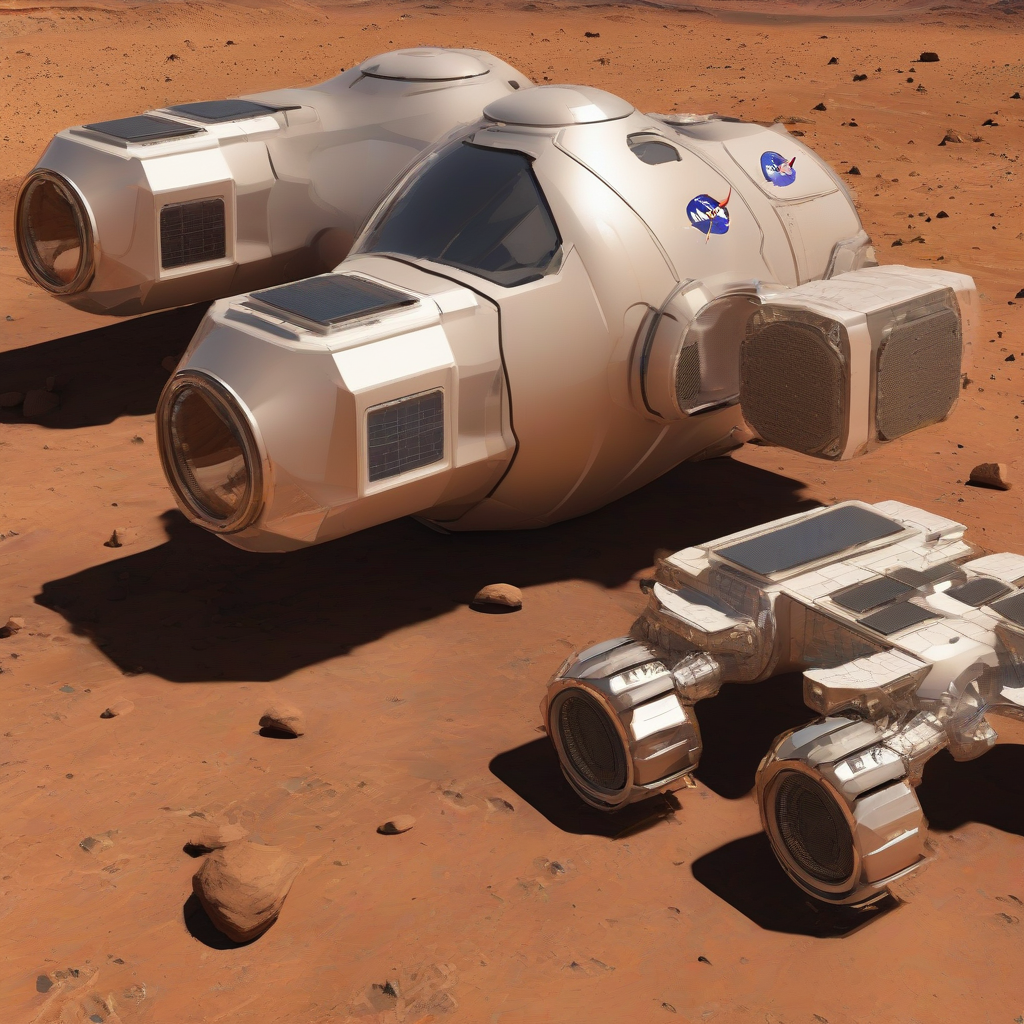

Could a toxic chemical in Mars dirt help us build a Red Planet base?
The Unexpected Ally in Building a Martian Base: A Toxic Compound on the Red Planet
As we continue to explore the possibility of establishing a human settlement on Mars, one of the biggest challenges we face is finding ways to make the Martian environment habitable. One potential solution lies in using local resources, such as the planet's dirt, to create bricks and other building materials. But what if we told you that a toxic compound found on Mars could actually help us achieve this goal?
The Bacterium that Could Help Us Build a Martian Base
In 2025, researchers at the Indian Institute of Science showed how the bacterium Sporosarcina pasteurii, which is commonly found in Earth soils, could help create bricks out of regolith on the moon and Mars. The bacterium produces urea as a waste product, which can then react with calcium to produce calcium carbonate crystals. By mixing these calcium carbonate crystals with guar gum, a natural adhesive extracted from guar beans, particles of the local regolith can be bound together to form a brick-like material.
The Role of Perchlorate in the Bacterial Process
Perchlorate, a toxic, chlorine-containing chemical, was first found in Martian regolith in 2008 by NASA's Phoenix lander at an abundance of 0.5% to 1%. While its toxicity is a concern, researchers have found that it can actually help the bacterium Sporosarcina pasteurii produce a stronger brick material. When perchlorate is added to the simulant, it causes stress to the bacterial cells, slowing their growth and causing them to clump together. This leads to the production of an extracellular matrix (ECM), which forms tiny "microbridges" between bacterial cells and the calcium carbonate crystals.
The Surprising Benefits of Perchlorate
Despite the cellular damage caused by perchlorate, the team found that the brick material produced is stronger than in previous experiments. The ECM plays a crucial role in this process, providing a pathway for nutrients to reach the bacteria and helping to repair their stressed cells. This process, called biocementation, is essential for creating a strong and durable brick material.
Implications for Building a Martian Base
The discovery of the bacterium Sporosarcina pasteurii and its ability to produce a strong brick material using perchlorate has significant implications for building a Martian base. By using local resources and harnessing the power of microorganisms, we can create a sustainable and self-sufficient habitat on the Red Planet. This approach not only reduces the need for heavy materials to be transported from Earth but also provides a more environmentally friendly solution.
Future Research Directions
While the findings of this study are promising, further research is needed to fully understand the potential of biocementation in building a Martian base. The team plans to experiment with the biocementation process in a carbon dioxide-rich atmosphere, mimicking the atmosphere on Mars. This will help to determine the effects of the Martian environment on the bacteria and the resulting brick material.
Conclusion
The discovery of the bacterium Sporosarcina pasteurii and its ability to produce a strong brick material using perchlorate has opened up new possibilities for building a Martian base. By harnessing the power of microorganisms and using local resources, we can create a sustainable and self-sufficient habitat on the Red Planet. As we continue to explore the possibility of establishing a human settlement on Mars, this research provides a promising direction for future studies.
Forward-Looking Thoughts
The implications of this research extend beyond the possibility of building a Martian base. The use of biocementation in construction could have significant benefits for Earth-based construction as well. By harnessing the power of microorganisms, we can create more sustainable and environmentally friendly building materials. This approach could also provide new opportunities for disaster relief and recovery efforts, where biocementation could be used to create temporary or permanent structures in areas affected by natural disasters.
Practical Insights and Implications
The discovery of the bacterium Sporosarcina pasteurii and its ability to produce a strong brick material using perchlorate has significant practical implications for building a Martian base. By using local resources and harnessing the power of microorganisms, we can create a sustainable and self-sufficient habitat on the Red Planet. This approach not only reduces the need for heavy materials to be transported from Earth but also provides a more environmentally friendly solution.
Technical Details
The bacterium Sporosarcina pasteurii produces urea as a waste product, which can then react with calcium to produce calcium carbonate crystals. By mixing these calcium carbonate crystals with guar gum, a natural adhesive extracted from guar beans, particles of the local regolith can be bound together to form a brick-like material. The addition of perchlorate causes stress to the bacterial cells, slowing their growth and causing them to clump together. This leads to the production of an extracellular matrix (ECM), which forms tiny "microbridges" between bacterial cells and the calcium carbonate crystals.
Specific Examples
The discovery of the bacterium Sporosarcina pasteurii and its ability to produce a strong brick material using perchlorate has significant implications for building a Martian base. By using local resources and harnessing the power of microorganisms, we can create a sustainable and self-sufficient habitat on the Red Planet. This approach not only reduces the need for heavy materials to be transported from Earth but also provides a more environmentally friendly solution.
Future Research Directions
While the findings of this study are promising, further research is needed to fully understand the potential of biocementation in building a Martian base. The team plans to experiment with the biocementation process in a carbon dioxide-rich atmosphere, mimicking the atmosphere on Mars. This will help to determine the effects of the Martian environment on the bacteria and the resulting brick material.
Conclusion
The discovery of the bacterium Sporosarcina pasteurii and its ability to produce a strong brick material using perchlorate has opened up new possibilities for building a Martian base. By harnessing the power of microorganisms and using local resources, we can create a sustainable and self-sufficient habitat on the Red Planet. As we continue to explore the possibility of establishing a human settlement on Mars, this research provides a promising direction for future studies.