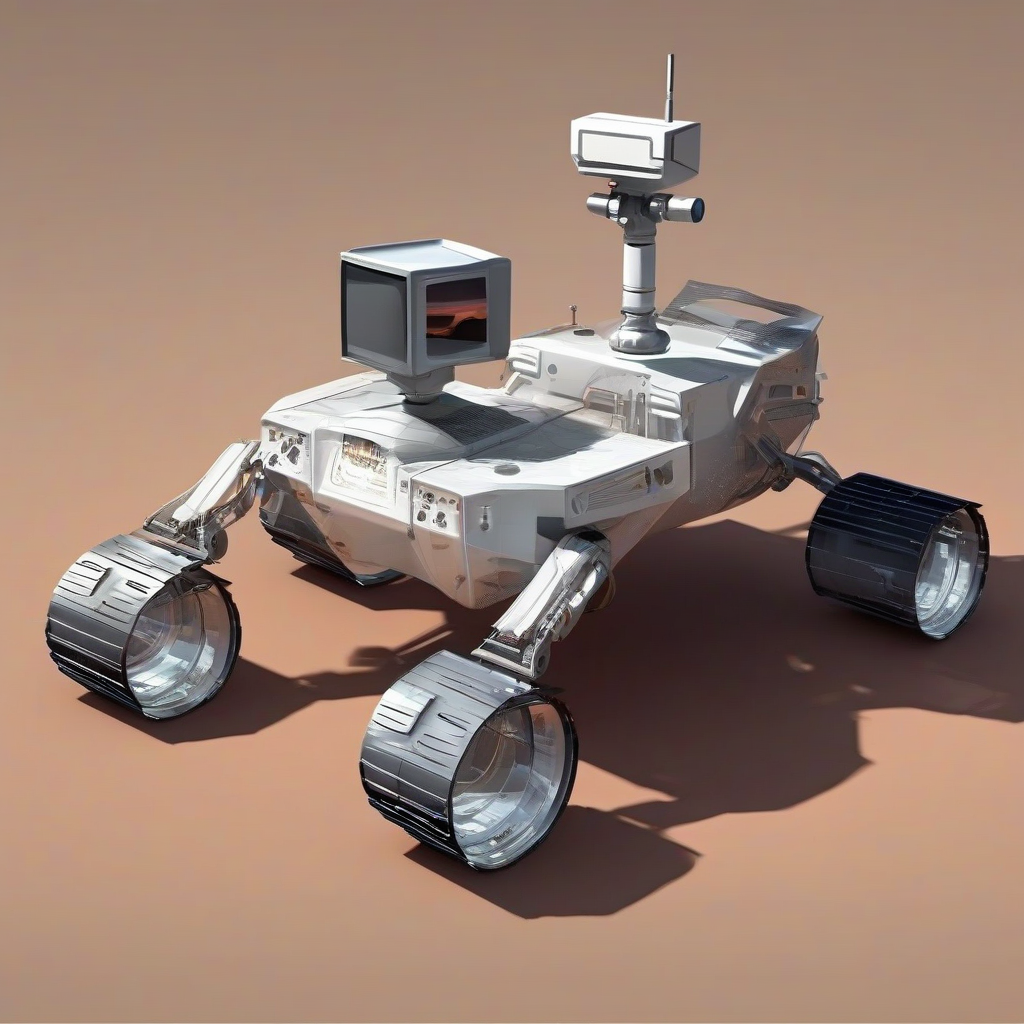

GoZTASP: A Zero-Trust Platform for Governing Autonomous Systems at Mission Scale
The Future of Autonomous Systems: Why Zero-Trust Governance is a Must
As we continue to push the boundaries of what is possible with autonomous systems, one thing becomes increasingly clear: traditional security models are no longer sufficient. The rise of distributed autonomous systems, including drones, robots, and sensors, has created a new set of challenges that require a fundamentally different approach to security.
The Limitations of Perimeter-Based Security
For decades, the security industry has relied on perimeter-based security models, which focus on protecting the boundaries of a network or system from external threats. However, this approach is no longer effective in the age of autonomous systems. With the increasing use of edge computing, IoT devices, and mesh networking, the traditional notion of a secure perimeter is becoming increasingly blurred.
In a distributed autonomous system, the concept of a perimeter is no longer relevant. Instead, we need to focus on ensuring that each individual component of the system is secure, and that the interactions between components are also secure. This requires a fundamentally different approach to security, one that is based on zero-trust principles.
Zero-Trust Principles: The Key to Secure Autonomous Systems
Zero-trust principles are based on the idea that no component of a system can be trusted by default. Instead, each component must be continuously verified and authenticated before it is allowed to interact with other components. This approach ensures that even if one component is compromised, the rest of the system remains secure.
In a zero-trust architecture, each component is treated as a separate entity, and each interaction between components is carefully managed and authenticated. This approach requires the use of advanced technologies such as secure runtime assurance (SRTA) and secure spatio-temporal reasoning (SSTR).
Secure Runtime Assurance: Enforcing Safety Constraints in Real-Time
SRTA is a critical component of a zero-trust architecture, as it enables the enforcement of safety constraints in real-time. By continuously monitoring the behavior of each component, SRTA can detect and respond to potential security threats before they become a problem.
SRTA draws on approaches from runtime monitoring, formal verification, and safety-wrapper architectures. By combining these approaches, SRTA can provide a comprehensive view of the system's behavior, enabling the detection of potential security threats and the enforcement of safety constraints.
Secure Spatio-Temporal Reasoning: Enabling Context-Aware Decision-Making
SSTR is another critical component of a zero-trust architecture, as it enables context-aware decision-making across heterogeneous systems. By taking into account the spatial and temporal context of each component, SSTR can provide a nuanced understanding of the system's behavior, enabling more informed decision-making.
SSTR draws on approaches from artificial intelligence, machine learning, and computer vision. By combining these approaches, SSTR can provide a comprehensive view of the system's behavior, enabling the detection of potential security threats and the enforcement of safety constraints.
The Engineering Trade-Offs of Chip-to-Cloud Assurance
Implementing a zero-trust architecture requires careful consideration of the engineering trade-offs involved in designing chip-to-cloud assurance architectures. These trade-offs include latency, computational constraints on edge devices, communication resilience under degraded conditions, and trust propagation across distributed networks.
By carefully balancing these trade-offs, it is possible to design a zero-trust architecture that is both secure and efficient. This requires a deep understanding of the system's behavior, as well as the use of advanced technologies such as SRTA and SSTR.
Real-World Applications: Why Zero-Trust Governance Matters
The implications of zero-trust governance are far-reaching, with potential applications in a wide range of industries, including healthcare, transportation, and critical infrastructure. By ensuring the security and safety of autonomous systems, zero-trust governance can help to prevent accidents, reduce costs, and improve public trust.
In conclusion, the future of autonomous systems requires a fundamentally different approach to security, one that is based on zero-trust principles. By ensuring the security and safety of each individual component of a system, and the interactions between components, zero-trust governance can help to prevent accidents, reduce costs, and improve public trust.