ZadeNor AI
ZadeNor AI
Back to Blog
Robotics & Automation

How JPL Keeps the 13-Year-Old Curiosity Rover Doing Science

June 10, 2026
5 min
647 views
By ZadeNor AI Team
How JPL Keeps the 13-Year-Old Curiosity Rover Doing Science

How JPL Keeps the 13-Year-Old Curiosity Rover Doing Science

The Marvel of Mars Exploration: How JPL Keeps the 13-Year-Old Curiosity Rover Doing Science

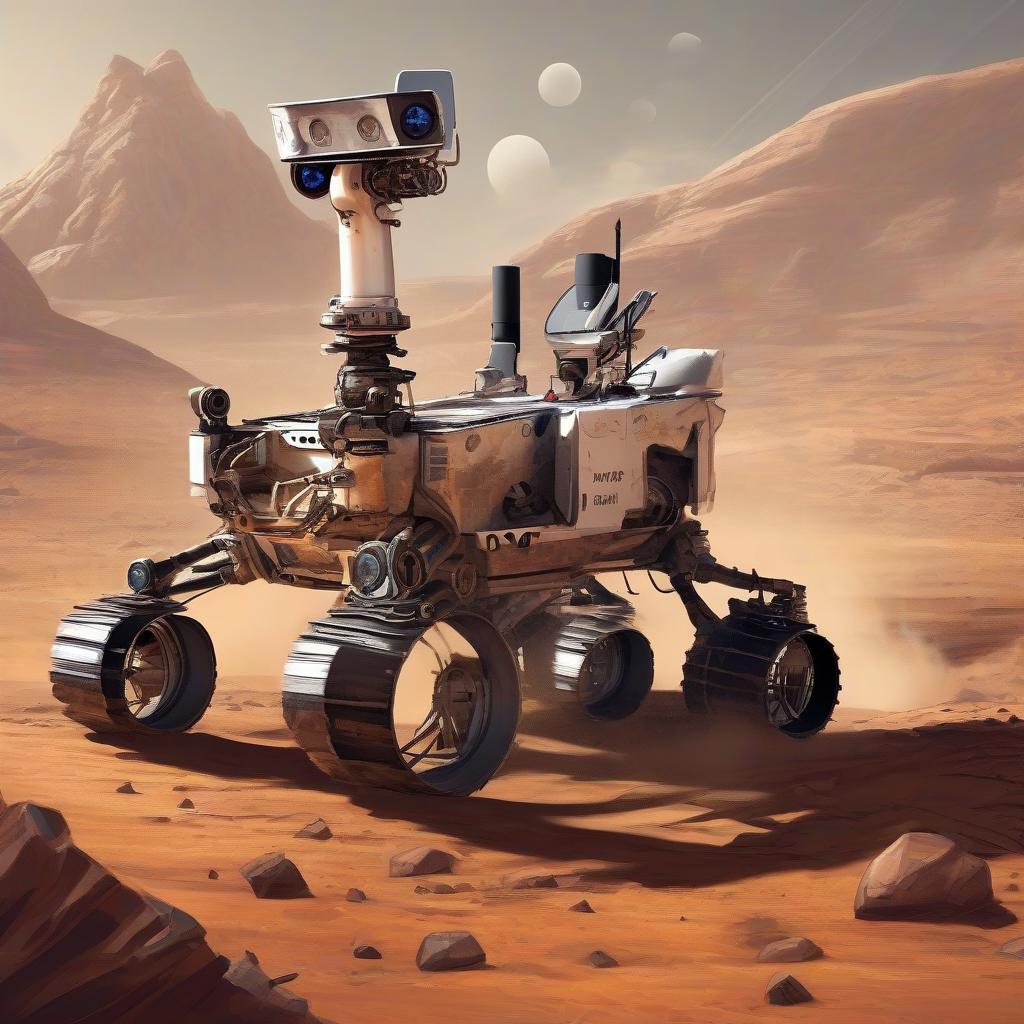
Thirteen years ago, the world held its breath as the Curiosity rover successfully landed on Mars, marking a major milestone in space exploration. Since then, this remarkable robot has traveled nearly 37 kilometers, drilled into and sampled 42 different rocks, and snapped nearly 763,000 photos. The fact that Curiosity is still hard at work, getting real science done at the age of 13, is a testament to the ingenuity and dedication of the team at the Jet Propulsion Laboratory (JPL).

At the heart of Curiosity's success is Alexandra Holloway, the assistant team chief for engineering operations. Holloway spoke to IEEE Spectrum about the challenges of keeping the rover running, its future prospects, and the lessons learned from this remarkable mission.

A Long and Winding Road: The Challenges of Maintaining Curiosity

Holloway emphasizes that Curiosity's longevity is not just a result of its robust design, but also the ongoing efforts of the JPL team to ensure its continued operation. "It's mind-boggling, and it's inspiring," she says. "We're continuously putting in effort to ensure it can continue to have that lifespan."

One of the biggest challenges facing Curiosity is wheel wear. The rover's wheels have been damaged by the harsh Martian terrain, and the team has had to adapt by driving backwards to minimize the impact. Consumables, such as power and memory, are also a concern, with the rover's nuclear power source projected to start degrading science output in the sixth extended mission.

Software Updates and Lifeboat Strategies

To mitigate these challenges, the JPL team has developed innovative software updates and lifeboat strategies. For example, when one of the rover's computers experienced a memory anomaly, the team was able to transfer data from the affected computer to the other, and then use the spare memory to create a new file system. This "R-Hope" flight software release allowed the rover to continue operating with reduced capabilities.

Power Management and Parallelism

Another key strategy is power management. To reduce the rover's power consumption, the team has implemented a system that allows the rover to "sleep" when not in use, and to wake up only when necessary. This has been achieved through the use of parallelism, where the rover can perform multiple tasks simultaneously, such as driving and communicating with an orbiter.

Lessons Learned and Future Prospects

The Curiosity mission has provided valuable lessons for future Mars exploration. Holloway emphasizes the importance of involving operators and users in the design process, to ensure that the data products meet the needs of the mission. She also highlights the need for better power management and more efficient software systems.

Looking ahead, Curiosity is expected to continue operating until at least 2035, and potentially beyond. The rover's long-term future is uncertain, but one thing is clear: the lessons learned from this remarkable mission will shape the future of Mars exploration.

Conclusion

The Curiosity rover's 13-year journey is a testament to the power of human ingenuity and determination. As we look to the future of Mars exploration, we can draw inspiration from this remarkable mission, and the lessons learned from the JPL team's innovative strategies and solutions. The future of space exploration is bright, and the Curiosity rover will continue to inspire and educate us for years to come.


Source: https://spectrum.ieee.org/curiosity-rover-jpl-mars-science
About the Author

ZadeNor AI Team is a leading expert in ROBOTICS & AUTOMATION, contributing to cutting-edge research and development in the field.

Related Posts

IEEE Honors Robotics Pioneer Toshio Fukuda

IEEE Honors Robotics Pioneer Toshio Fukuda

Toshio Fukuda has been blazing trails for most of his career. He is considered to be one of the most prolific scholars in robotics, writing more than 2,000 research papers and authoring several books on the field. He’s an influential figure thanks to his pioneering work developing biomedical robotic systems, industrial robots, micro-nano robotics, mechatronics, and AI-driven automation.Fukuda launched one of the first robotics conferences, the IEEE/RSJ International Conference on Intelligent Robots and Systems (IROS). It is still popular almost 40 years later.Toshio FukudaEmployerEgypt-Japan University of Science and Technology, in Alexandria TitleProfessor and vice president of research Member gradeLife Fellow Alma matersWaseda University, in Tokyo; University of Tokyo An IEEE Life Fellow, he is a professor emeritus in the department of micro-nano systems engineering and a visiting professor at Nagoya University, in Japan, where he taught for nearly 25 years. Currently, he is a vice president of research at the...

490
5 min
Video Friday: An Earthbound Mars Rover for the Moon

Video Friday: An Earthbound Mars Rover for the Moon

Video Friday is your weekly selection of awesome robotics videos, collected by your friends at IEEE Spectrum robotics. We also post a weekly calendar of upcoming robotics events for the next few months. Please send us your events for inclusion.RSS 2026: 13–17 July 2026, SYDNEYSummer School on Multi-Robot Systems: 29 July–4 August 2026, PRAGUEActuate 2026: 18–19 August 2026, SAN FRANCISCOIROS 2026: 27 September–1 October 2026, PITTSBURGHEnjoy today’s videos! NASA is considering a mission concept for an advanced, nuclear-powered rover to be deployed to the Moon’s South Pole as part of the agency’s Moon Base plans. The PROMISE (Polar Rover for Observation, Mapping, and In-Situ Exploration) mission concept relies on the Curiosity Mars rover mission’s testbed rover. Some elements of the Perseverance Mars testbed rover shown in this video could be used as well. As exact duplicates of Curiosity and Perseverance, the testbed rovers are equipped with flight-proven engineering systems capable...

488
5 min
Video Friday: Give Robots a Hand

Video Friday: Give Robots a Hand

Video Friday is your weekly selection of awesome robotics videos, collected by your friends at IEEE Spectrum robotics. We also post a weekly calendar of upcoming robotics events for the next few months. Please send us your events for inclusion.RSS 2026: 13–17 July 2026, SYDNEYSummer School on Multi-Robot Systems: 29 July–4 August 2026, PRAGUEActuate 2026: 18–19 August 2026, SAN FRANCISCOIROS 2026: 27 September–1 October 2026, PITTSBURGHEnjoy today’s videos! The best way of introducing a new robot hand is to have a disembodied one crawling across a table.[ Tangent Robotics ]MIT CSAIL’s Improbable AI Lab Director Pulkit Agrawal explains his “SoftMimic” approach to making robots safer around humans.[ SoftMimic ]I now have absolutely no interest in a humanoid robot for my home unless it can do this.[ PNDbotics ]The DARPA Lift Challenge is open to the public Aug. 6-9, 2026, at the National Museum of the US Air Force.[ DARPA ]Getting...

356
5 min