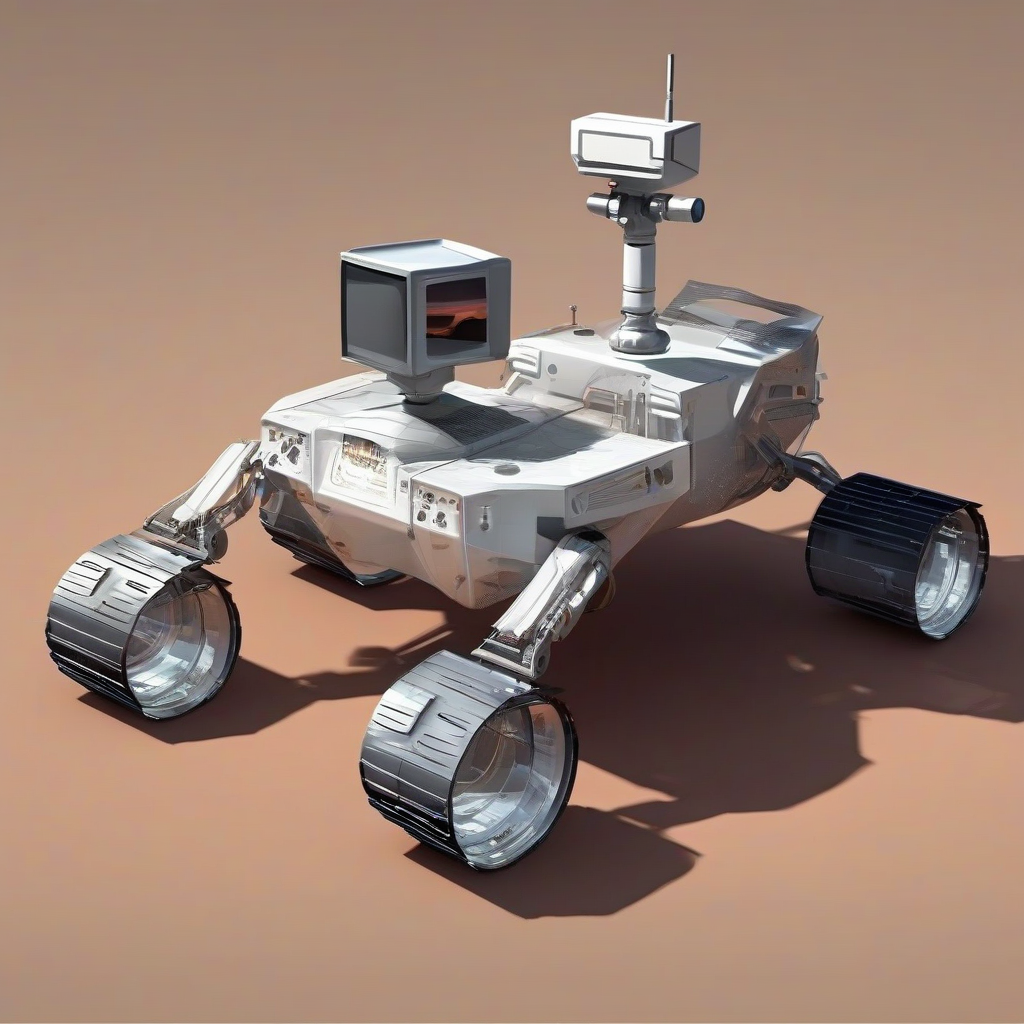

Proposed Chinese Robot Ban Is Latest U.S. Tech Sovereignty Move
The Great Decoupling: U.S. Tech Sovereignty and the Proposed Chinese Robot Ban
The American Security Robotics Act, a bipartisan bill introduced in March by Senators Tom Cotton (R-Ark.) and Chuck Schumer (D-N.Y.) and Representative Elise Stefanik (R-N.Y.), aims to limit the U.S. government's use of Chinese ground robots, including humanoids, dogs, and crawlers. This proposal is the latest move in a broader decoupling of sensitive U.S. tech from China, which includes semiconductors, port cranes, logistics data, telecom cellular base stations and network hardware, security cameras, passenger vehicles, and uncrewed aircraft systems (UAS) including those sold by DJI.
The proposed ban on Chinese ground robots is not an isolated incident. In recent years, the U.S. government has taken steps to restrict the use of Chinese technology in various sectors, including telecommunications, cybersecurity, and artificial intelligence. The Federal Communications Commission (FCC) has tightened its rules for new foreign-made routers, and the U.S. Department of Commerce has sought to ban Chinese-made UASs for over a year.
The Impact on the U.S. Robotics Industry
The proposed ban on Chinese ground robots could have significant implications for the U.S. robotics industry. While some U.S. firms, such as Ghost Robotics, may benefit from the ban, others may struggle to adapt to the new regulations. The U.S. robotics industry is in a pickle, as companies would benefit from eliminating Chinese competitors at their level of the value chain, but they may struggle to retain their Chinese suppliers.
According to Stephen Ezell, a senior vice president at the Information Technology and Innovation Foundation, the U.S. does not have a serious, overarching strategy guiding its approach to the U.S.-China techno-economic competition. "The U.S. does not have a serious, overarching strategy to guiding its approach to the U.S.-China techno-economic competition," Ezell said in an interview.
The Importance of Supply Chain Resilience
The proposed ban on Chinese ground robots highlights the importance of supply chain resilience in the face of global trade tensions and technological competition. The U.S. government's efforts to restrict the use of Chinese technology in various sectors demonstrate the need for companies to have clear visibility into their suppliers and suppliers' suppliers.
According to Shawn DuBravac, an economist at the Global Electronics Association, companies must be prepared to navigate the complexities of global trade and technology competition. "If you're a company, you're going to have to have clear visibility into your suppliers and into your suppliers' suppliers," DuBravac said in an interview.
The Role of the FCC in Regulating Technology
The FCC plays a critical role in regulating technology in the United States, particularly in the areas of telecommunications and cybersecurity. The FCC's Public Safety and Homeland Security Bureau has announced the ban on Chinese-made UASs, and the agency has also taken steps to restrict the use of foreign-made routers.
However, the FCC's regulatory approach has been criticized for being too abrupt and lacking in transparency. According to Kyle Chan, a sociologist at the Brookings Institute, the FCC's regulatory approach has been characterized by a lack of dialogue with industry stakeholders. "When you see a problem, you open an investigation and stakeholders can submit input into that investigation so it feels a little more like a two-way conversation, so you're actually hearing from industry on this," Chan said in an interview.
Forward-Looking Thoughts and Implications
The proposed ban on Chinese ground robots and the broader decoupling of sensitive U.S. tech from China have significant implications for the U.S. technology industry and the global economy. As the U.S. government continues to take steps to restrict the use of Chinese technology, companies must be prepared to adapt to the changing regulatory landscape.
The proposed ban on Chinese ground robots highlights the importance of supply chain resilience and the need for companies to have clear visibility into their suppliers and suppliers' suppliers. The FCC's regulatory approach has been criticized for being too abrupt and lacking in transparency, and companies must be prepared to navigate the complexities of global trade and technology competition.
As the U.S. government continues to take steps to restrict the use of Chinese technology, companies must be prepared to adapt to the changing regulatory landscape. The proposed ban on Chinese ground robots and the broader decoupling of sensitive U.S. tech from China have significant implications for the U.S. technology industry and the global economy, and companies must be prepared to navigate the complexities of global trade and technology competition.