Video Friday: Gemini Robotics Improves Motor Skills
Pushing the Boundaries: AI-Driven Motor Skills in Robotics
Every Friday, the robotics community eagerly awaits a fresh wave of innovation from leading labs and companies. This week’s video roundup brings to the fore not only the latest research but also a glimpse into how robotics is being transformed by advances in artificial intelligence, particularly in the area of motor skill development. From vision-language-action models that make robots more transparent and versatile, to soft robots that defy conventional expectations, these developments are laying the groundwork for a new era in robotics—one where machines can learn, adapt, and interact with the physical world more fluidly than ever before.
Gemini Robotics 1.5: Transparent Intelligence for Robot Motor Skills
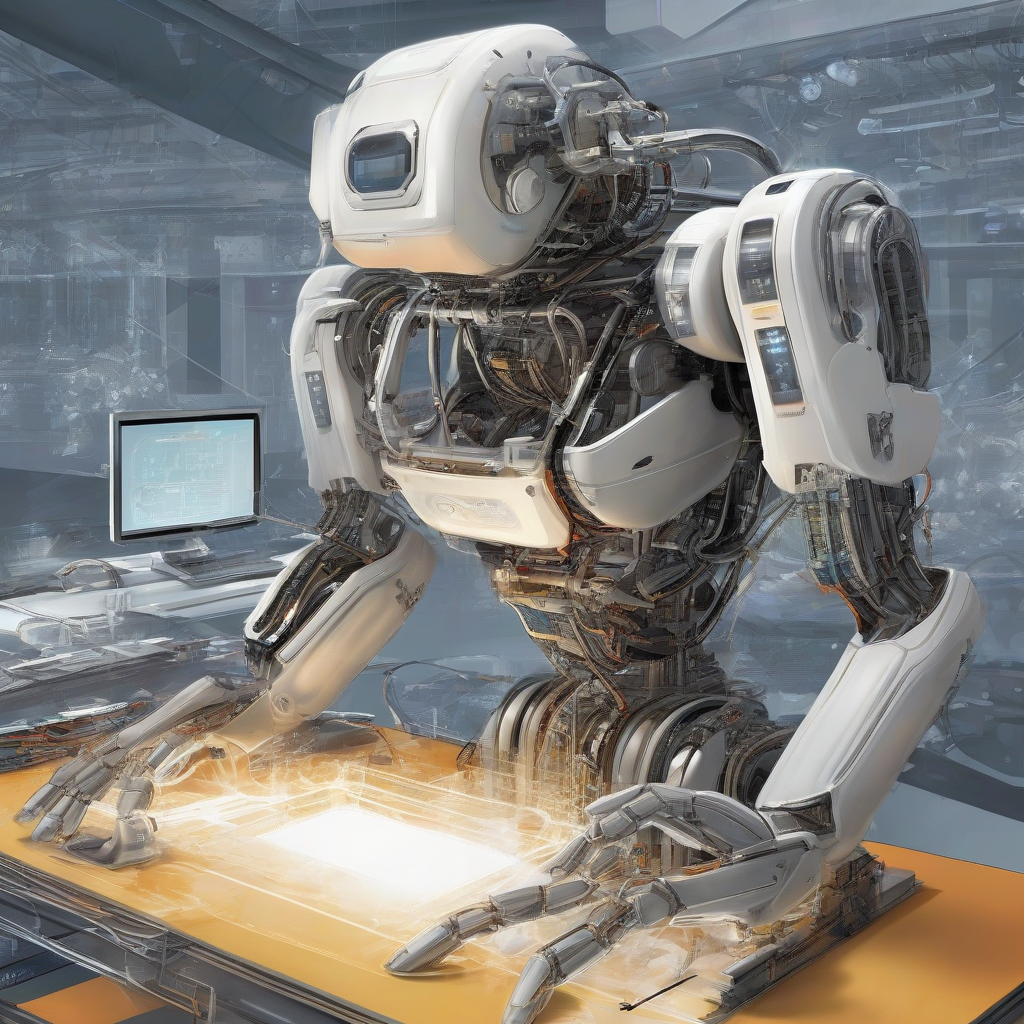
One of the most significant highlights comes from Google DeepMind’s Gemini Robotics 1.5, a vision-language-action (VLA) model that marks a new milestone in robot autonomy. What sets Gemini apart is not just its ability to interpret visual data and human language, but its explicit reasoning process. Instead of acting as a black box, Gemini “thinks aloud,” showing its decision-making process step by step before executing a task.
How does this work?
Gemini Robotics 1.5 processes visual input from cameras, parses human instructions, and then plans a sequence of motor commands. For instance, if tasked with “pick up the red cup and place it on the shelf,” Gemini will first identify the cup, reason about the required grasp, plan a collision-free path, and only then execute the motion. At each stage, it can visualize and explain its intermediate steps.
Why does it matter?
Transparency is a game changer for deploying robots in real-world environments. By making its thought process visible, Gemini allows operators to intervene if something’s off, leading to safer and more reliable robots. This is especially critical in sectors like healthcare, logistics, and domestic robotics, where unexpected situations are the norm.
Real-world implications:
- Faster skill acquisition: Gemini’s cross-embodiment learning enables robots to acquire new skills rapidly, using knowledge from one type of robot to train another.
- Trust and safety: Human supervisors can better understand and trust the robot’s actions, facilitating wider adoption in sensitive domains.
Intuitive Human-Robot Interaction: The “Force Pull” Gesture
Robust.ai demonstrates an elegant approach to intuitive robot control. In the featured video, a simple “force pull” gesture brings a robot named Carter straight into a user’s hand. This interaction feels almost magical, yet it’s built on sophisticated intent recognition and motion planning algorithms.
Technical insight:
The system maps natural human gestures to robot actions by combining vision-based hand tracking with predictive path planning. The robot anticipates the user’s intent and moves accordingly, removing the need for explicit programming or teleoperation.
Practical impact:
- Improved accessibility: Non-technical users can control robots with ease.
- Broader adoption: Such intuitive interfaces can accelerate the integration of robots into homes, retail, and service industries.
Soft Robotics: Origami-Inspired Mobility
Robotics research is moving beyond rigid frames, as seen in the work from the University of Michigan and Shanghai Jiao Tong University. Their soft robot, constructed using an origami-inspired structure, showcases remarkable versatility—it can crawl on flat surfaces and even scale vertical walls.
How it works:
The robot’s body is made of foldable, compliant materials actuated by internal motors. Its movement is guided by precise control of the folding angles, giving it both the flexibility of soft robots and the accuracy traditionally found in rigid machines.
Why soft robots are a big deal:
- Adaptability: Soft robots can squeeze through tight spaces and operate safely alongside humans.
- New applications: This opens possibilities in search-and-rescue, medical endoscopy, and delicate manufacturing tasks previously off-limits to conventional robots.
Resilient Quadrupeds: Unitree G1 and ANYmal-D
Legged robots are achieving new feats of agility and resilience. The Unitree G1’s “antigravity” mode is a prime example; it can recover from falls and maintain balance during complex maneuvers. Meanwhile, ETH Zurich’s Robotic Systems Lab has developed a hierarchical reinforcement learning framework that enables the ANYmal-D quadruped to generalize animal-like locomotion skills to challenging terrains.
Technical details:
- Unitree G1: Uses advanced balance algorithms and real-time sensor feedback to immediately reorient itself after a fall, minimizing downtime.
- ANYmal-D: Employs a two-level reinforcement learning system—first imitating animal movements on flat terrain, then generalizing to obstacles and uneven ground without laborious reward tuning.
Significance:
- Reliability: Robots can operate in unpredictable environments, from disaster zones to remote inspection tasks.
- Reduced engineering overhead: Hierarchical RL reduces the need for manual tuning, making it easier to deploy advanced locomotion in new settings.
Commercialization and Scale: Kepler K2 Bumblebee Humanoid
Kepler Robotics is making headlines with the mass production of the K2 Bumblebee, the world’s first commercially available humanoid robot powered by Tesla’s hybrid architecture. This signals a transition from lab prototypes to scalable, real-world products.
Key features:
- Hybrid power system: Combines electric and hydraulic actuators for both strength and efficiency.
- Human-like dexterity: Designed for logistics, retail, and service roles that require adaptive manipulation.
Industry implications:
- Robotics as a service (RaaS): Companies can now access advanced humanoids without prohibitive upfront costs.
- Labor augmentation: Addresses workforce shortages in physically demanding or repetitive jobs.
Human-Robot Interfaces: Kinethreads Haptic Exosuit
The ACM Symposium on User Interface and Software Technology showcased Kinethreads—a lightweight, string-based haptic exosuit. Weighing under 5 kilograms and costing about $400, this wearable device provides distributed force feedback up to 120 newtons, enhancing immersion and precision in human-robot interaction.
Applications:
- Rehabilitation: Assists patients with movement therapy.
- Industrial augmentation: Provides workers with physical assistance and real-time feedback.
Robotics Inspired by Nature
Michael T. Tolley’s seminar at Carnegie Mellon underscores the value of bioinspired robotics. By emulating biological mechanisms—like the flexibility of octopus arms or the gait of insects—researchers are developing robots that can navigate unstructured environments and perform tasks previously limited to living organisms.
Why mimic nature?
- Efficiency: Biological designs are optimized by millions of years of evolution.
- Versatility: Nature offers solutions to challenges like locomotion, grasping, and adaptability that traditional engineering can’t match.
The Rise of Intelligent, Accessible Robotics
Boston Dynamics’ CTO Aaron Saunders (IBM AI in Action podcast) highlights a seismic shift: AI-powered robots are becoming safer, more cost-effective, and available as-a-service. This democratization is driven by advances like Gemini’s VLA models, resilient legged robots, and affordable exosuits.
Real-world consequences:
- Small businesses and startups can access cutting-edge robotics without massive investment.
- Robots can be quickly retrained or repurposed for new tasks, increasing operational flexibility.
Forward-Looking Implications
The convergence of advanced AI models, intuitive interfaces, robust locomotion, and scalable manufacturing is setting the stage for robotics to become an everyday part of work and life. The focus on transparency, adaptability, and bioinspiration is not just about technological novelty—it’s about making robots useful, safe, and trustworthy collaborators for humans.
As we look ahead to major events like CoRL 2025 in Seoul and the World Robot Summit in Osaka, expect to see these themes accelerate. The next breakthroughs will likely involve even tighter integration of AI reasoning, soft and adaptive hardware, and seamless human-robot interaction—transforming what robots can do, and how we live and work alongside them.
Source: https://spectrum.ieee.org/video-friday-google-gemini-robotics