Why Is Everyone’s Robot Folding Clothes?
The Rise of Robot Clothes Folding: Why Everyone's Talking About It
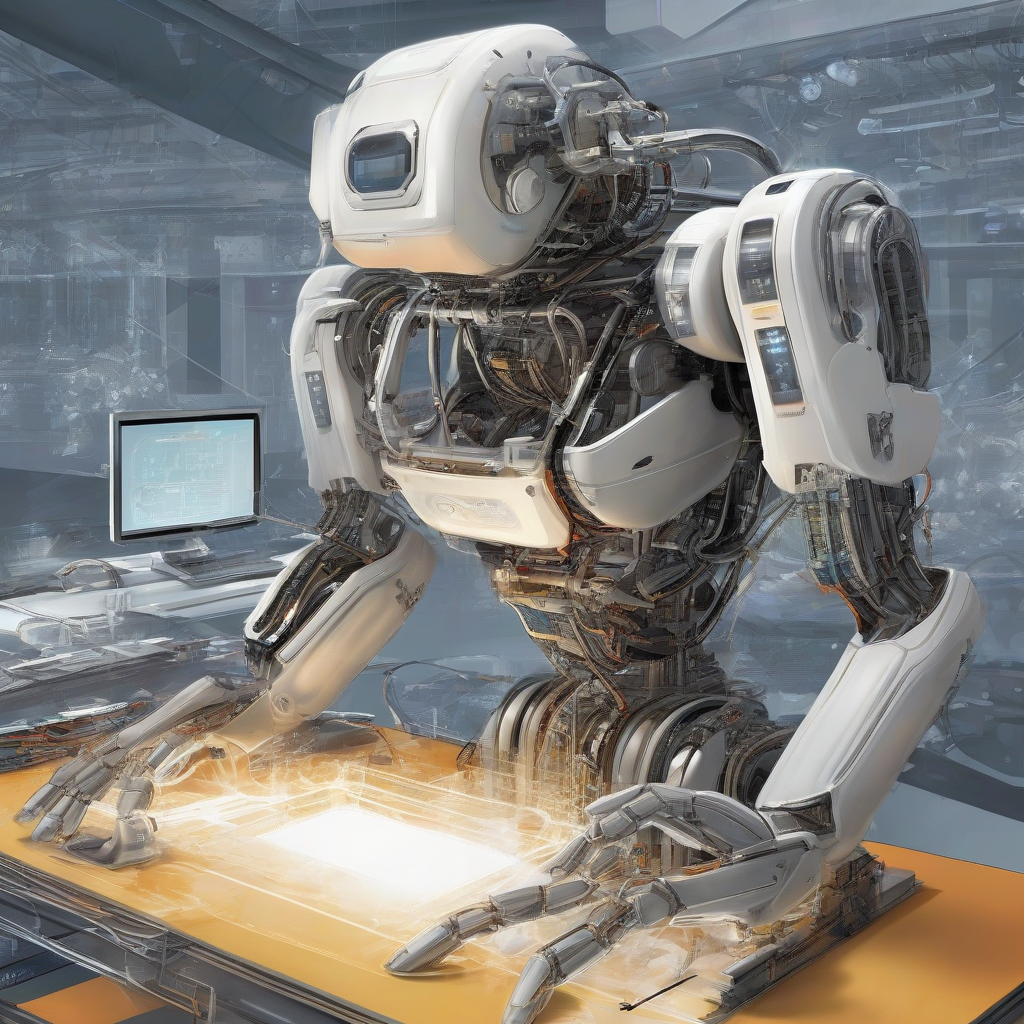
It seems like every week, there's a new video of a robot folding clothes. We've had some fantastic demonstrations, like the semi-autonomous video from Weave Robotics on X. It's awesome stuff, but Weave is far from the only company producing these kinds of videos. Figure 02 is folding clothes, and Figure 03 is folding clothes. Physical Intelligence launched their flagship vision-language-action model, pi0, with an amazing video of a robot folding clothes after unloading a laundry machine. You can see robots folding clothes live at robotics expos. Even before all this, Google showed clothes folding in their work, ALOHA unleashed. 7X Tech is even planning to sell robots to fold clothes!
Why Are Companies Suddenly Interested in Clothes Folding?
There are several reasons why companies are suddenly interested in clothes folding. One reason is that we've made significant progress in robotic manipulation, making it possible to create robots that can fold clothes with relative ease. This is a departure from the past, when clothes folding was a challenging task that required precise camera calibration and hand-designed features.
The Evolution of Robotic Clothes Folding
In the past, robotic clothes folding was a brittle and slow process. Previous solutions existed, but they relied on precise camera calibration or carefully hand-designed features, making them limited to a single robot, environment, and even a single demonstration. However, with the help of creatively patterned shirts, PR2 was folding things back in 2014. UC Berkeley's PR2 folding laundry from 2014 is a great example of this. This robot is using a neural network policy, but the policy is small and brittle, picking and placing objects against the same green background, moving very slowly, and can't handle a wide range of shirts.
The Key to Success: Imitation Learning
Many of the recent clothes-folding demos are produced by models trained via imitation learning. Modern imitation learning methods like Diffusion Policy use techniques inspired by generative AI to produce complex, dexterous robot trajectories, based on examples of expert human behavior that's been provided to them. These methods often need many, many trajectories, but they're well-suited for tasks like clothes folding, which are relatively forgiving.
Why Clothes Folding is a Great Task for Imitation Learning
Clothes folding is a great task for imitation learning because it's easy to collect demonstrations,edges are forgiving, and it's easy to reset the task. When learning a new skill, you need training examples with "coverage" of the space of environments you expect to see at deployment time. So the more control you have, the more efficient the learning process will be—the less data you'll need, and the easier it will be to get a flashy demo. Keep this in mind when you see a robot folding things on a plain tabletop or with an extremely clean background; that's not just nice framing, it helps the robot out a lot!
What to Look Forward To
While we're seeing a lot of clothes-folding demos now, I still feel, broadly, quite impressed with many of them. As mentioned above, Dyna was one of my favorite demos this year, mostly because longer-running robot policies have been so rare until now. But they were able to demonstrate zero-shot folding (meaning folding without additional training data) at a couple of different conferences, including Actuate in San Francisco and the Conference on Robot Learning (CoRL) in Seoul. This is impressive and actually very rare in robotics, even now.
The Future of Robot Clothes Folding
In the future, we should hope to see robots that can handle more challenging and dynamic interactions with their environments: moving more quickly, moving heavier objects, and climbing or otherwise handling adverse terrain while performing manipulation tasks. But for now, remember that modern learning methods will come with their own strengths and weaknesses. It seems that, while not easy, clothes folding is the kind of task that's just really well suited for what our models can do right now. So expect to see a lot more of it.
Implications and Real-World Applications
The rise of robot clothes folding has significant implications for the future of robotics and automation. As robots become more capable of performing tasks like clothes folding, they'll be able to take on more responsibilities in the home and in the workplace. This could lead to increased productivity, reduced labor costs, and improved quality of life for humans. Additionally, the development of robot clothes folding technology could have spin-off applications in areas like healthcare, where robots could be used to assist with tasks like wound care and rehabilitation.
Conclusion
The rise of robot clothes folding is a significant development in the field of robotics and automation. With the help of modern learning methods like imitation learning, robots are now able to perform tasks like clothes folding with relative ease. While this may seem like a trivial task, it has significant implications for the future of robotics and automation. As robots become more capable of performing tasks like clothes folding, they'll be able to take on more responsibilities in the home and in the workplace, leading to increased productivity, reduced labor costs, and improved quality of life for humans.